Wash without hookups
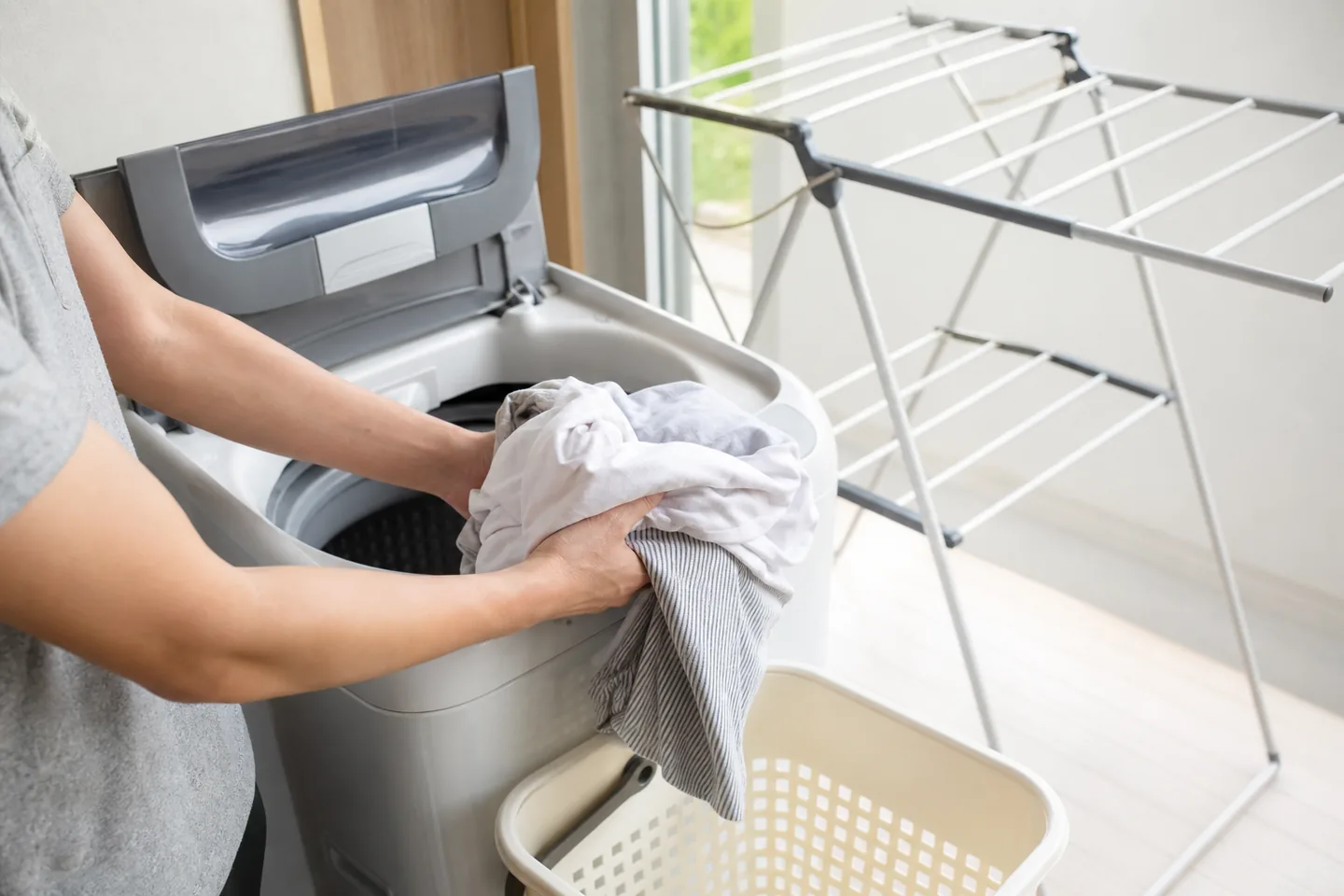
Will a Portable Washer Connect to Your Faucet? A Compatibility Check
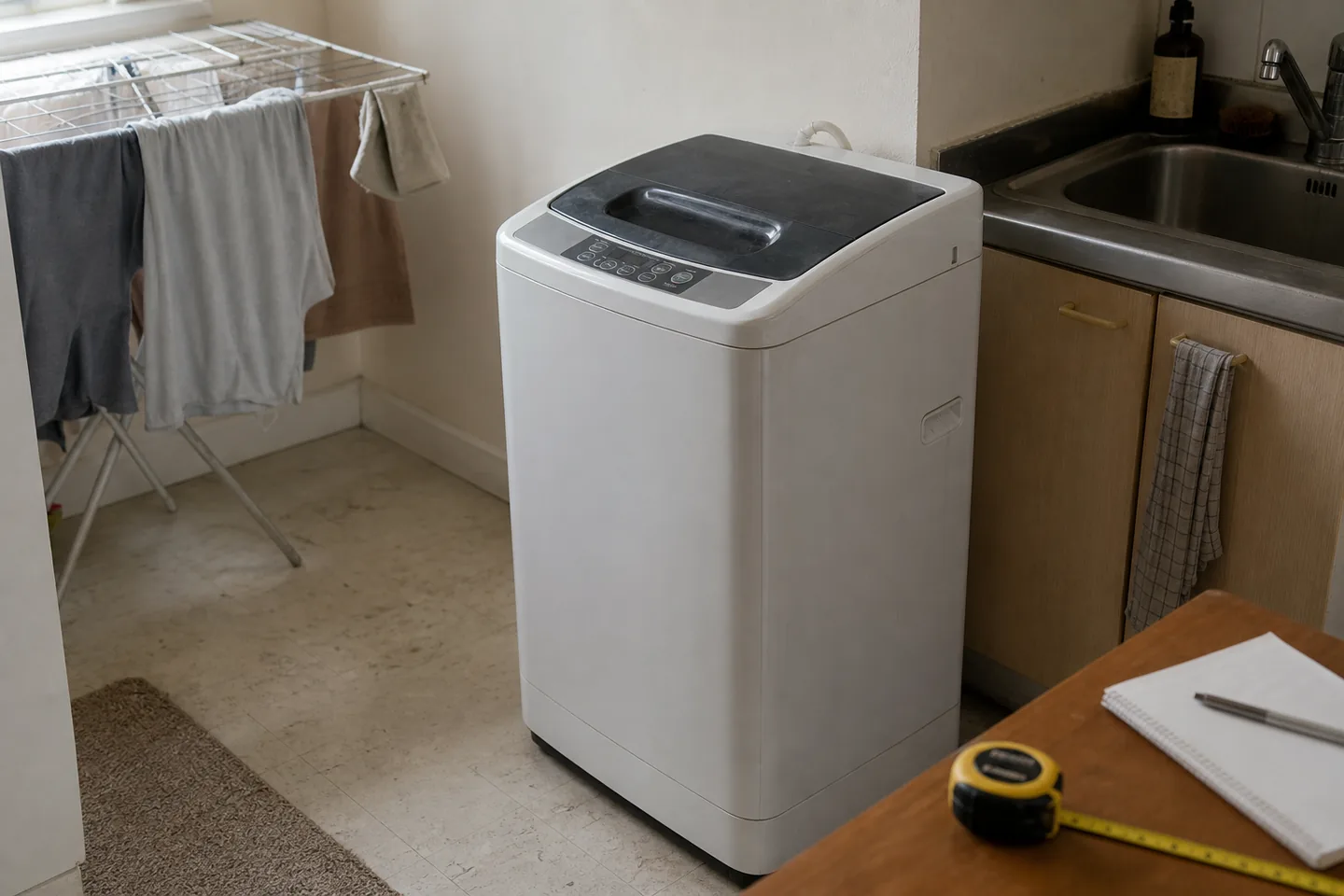
Inspect aerator access, threads, faucet shape, hose reach, sink use, and drain performance before assuming a portable washer will connect.
Field notes
Start with a constraint, not a product category. Every guide shows what to measure, what to verify, and where the recommendation stops.
Portable washers, sink connections, drainage, sizing, and renter-safe setup.
Wash without hookups
Inspect aerator access, threads, faucet shape, hose reach, sink use, and drain performance before assuming a portable washer will connect.
Wash without hookups
A renter-first decision guide to permission, faucet connection, drainage, power, movement, and drying before buying a portable washer.
Wash without hookups
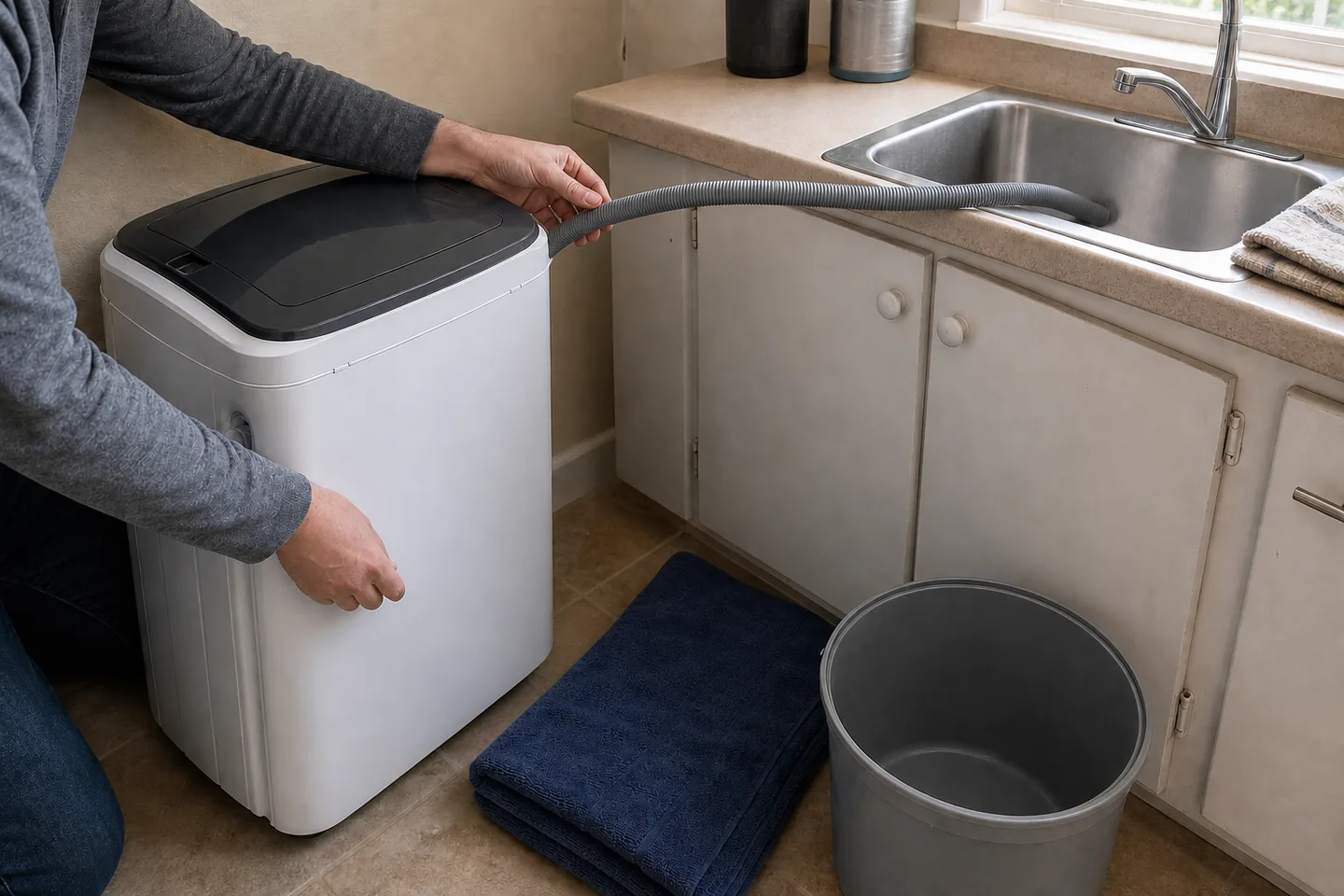
Plan sink capacity, drain-hose placement, supervision, residual-water handling, and a first-cycle test around the washer manual.
Wash without hookups
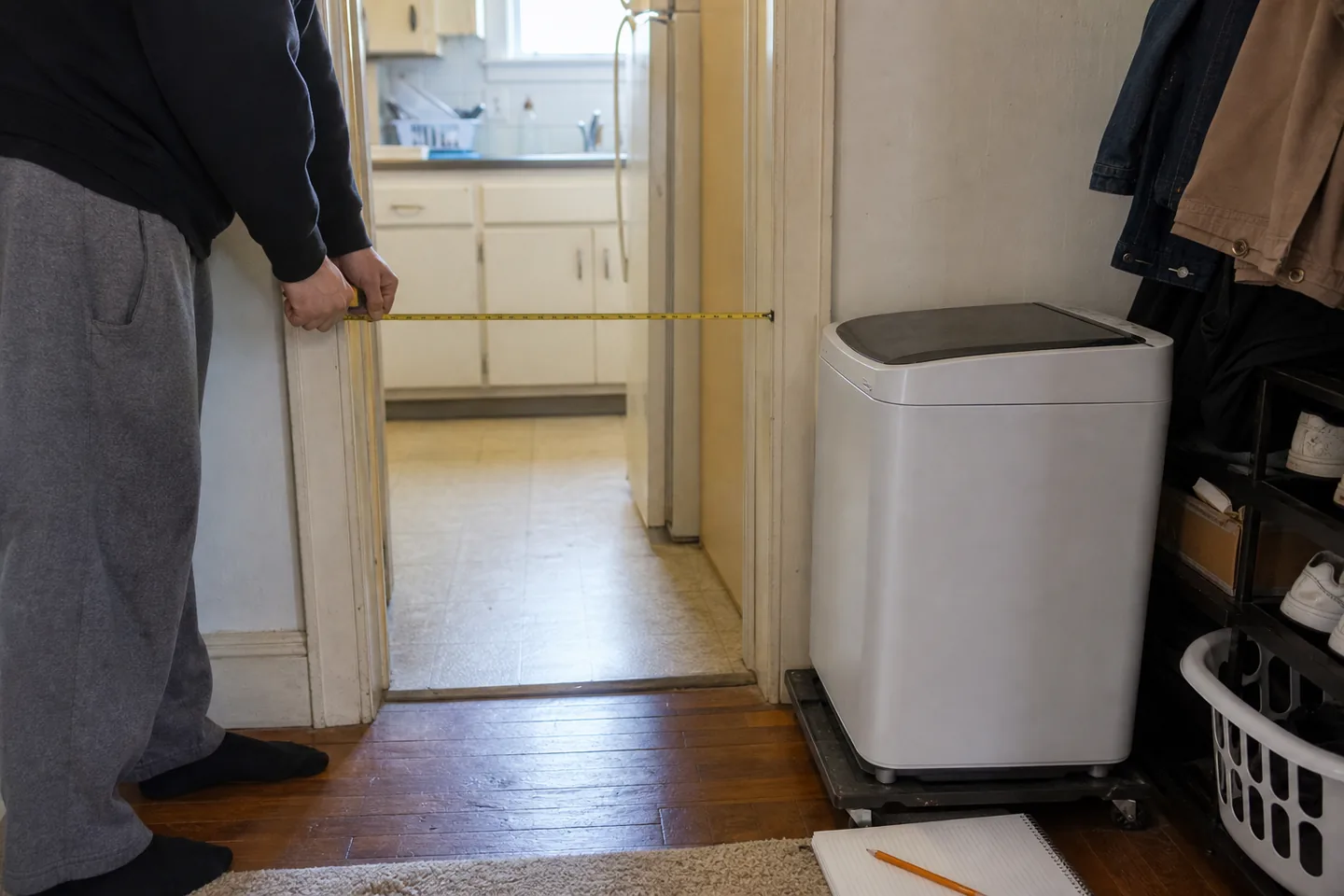
Choose a portable washer by usable load rhythm, path, storage footprint, drying capacity, and manual requirements—not cubic feet alone.
Drying racks, compact routines, faster air-drying, and fabric-aware methods.
Dry without a dryer
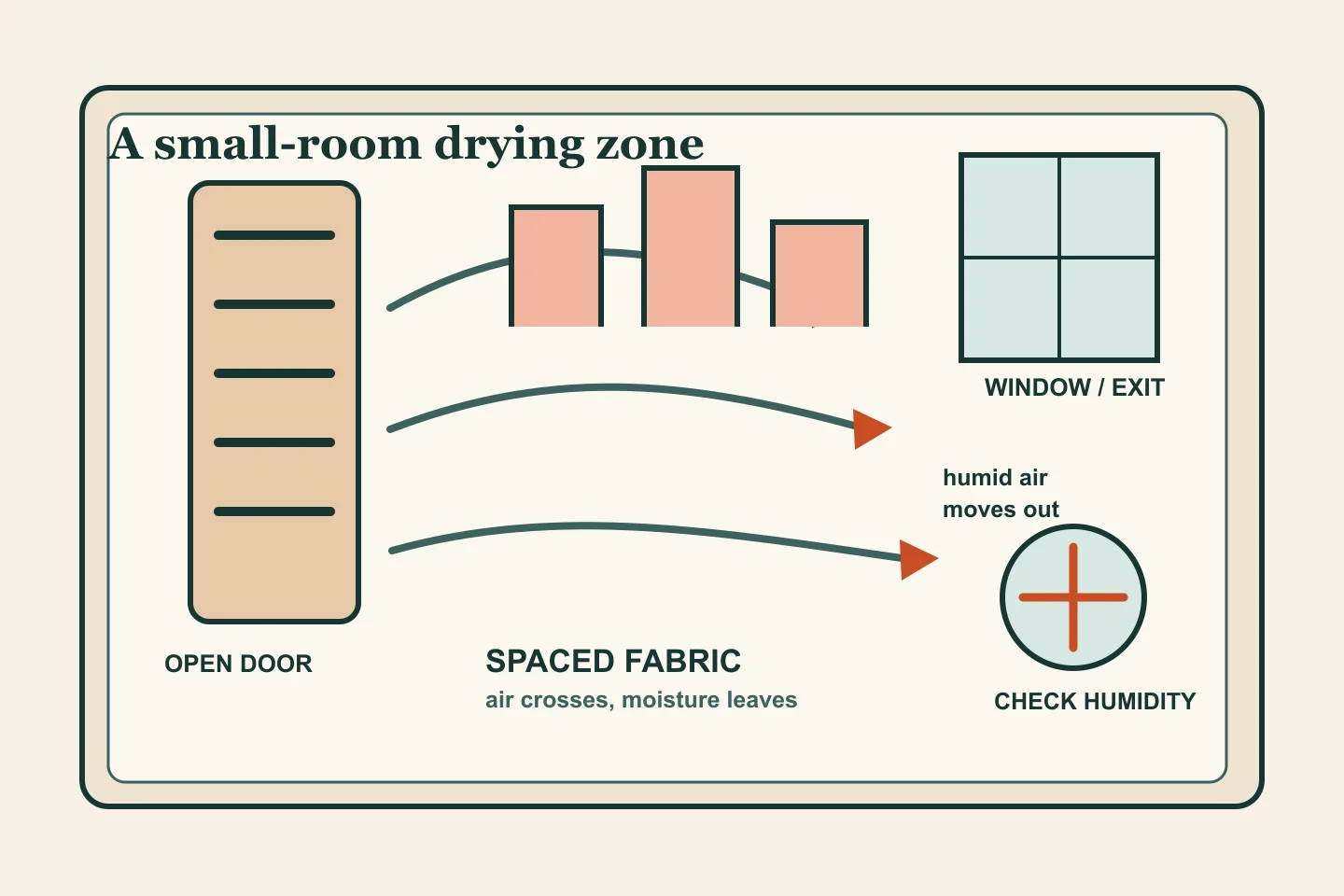
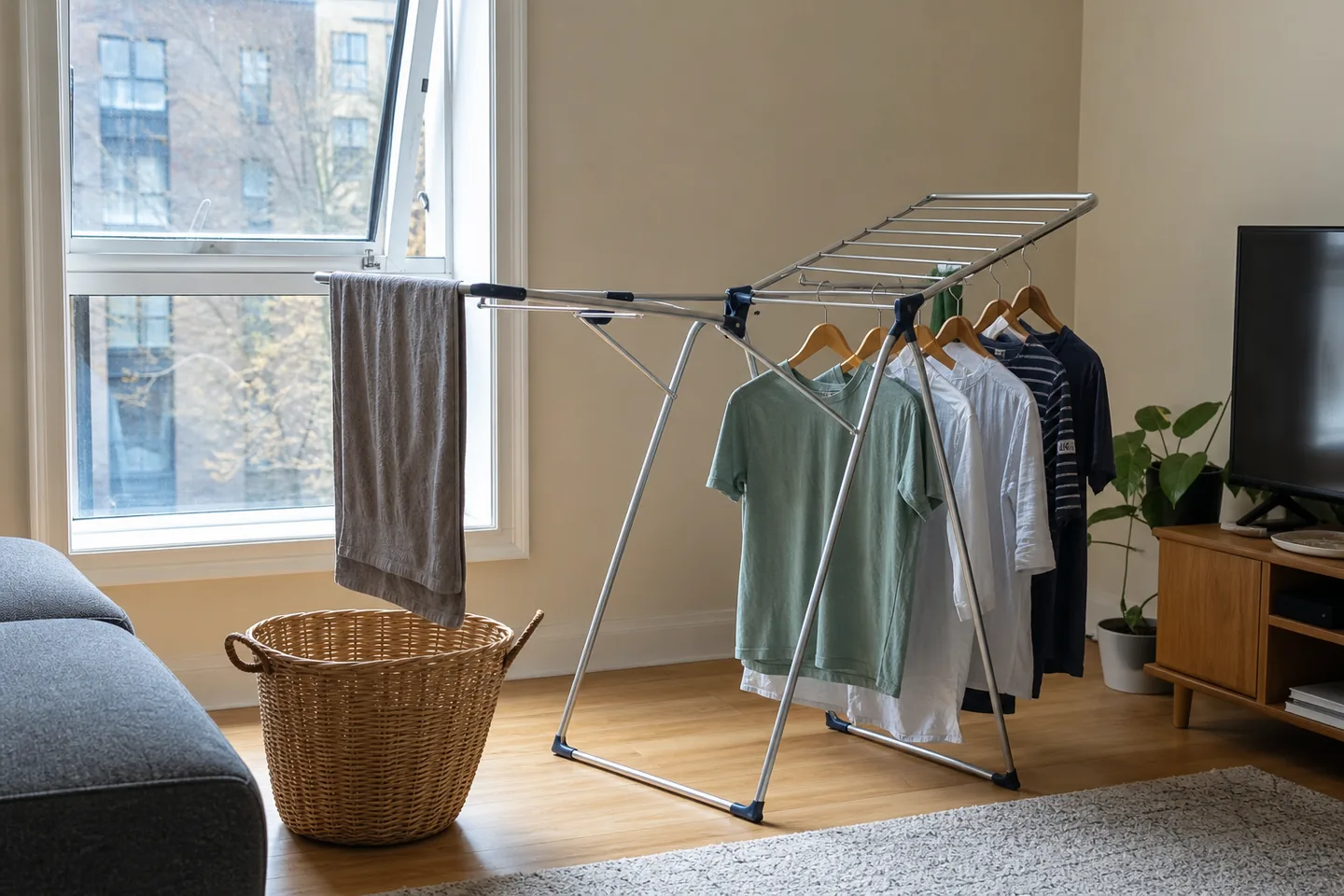
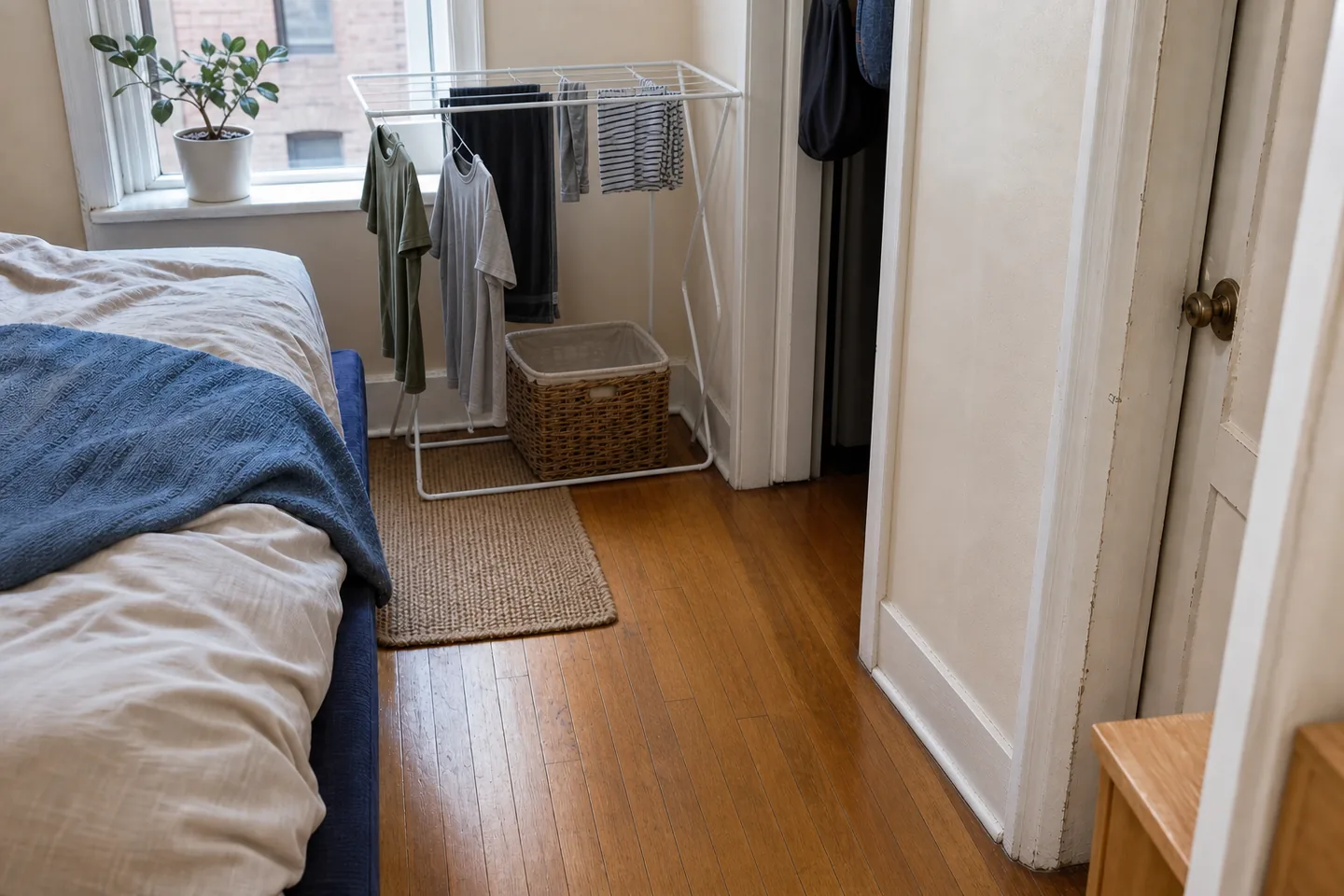
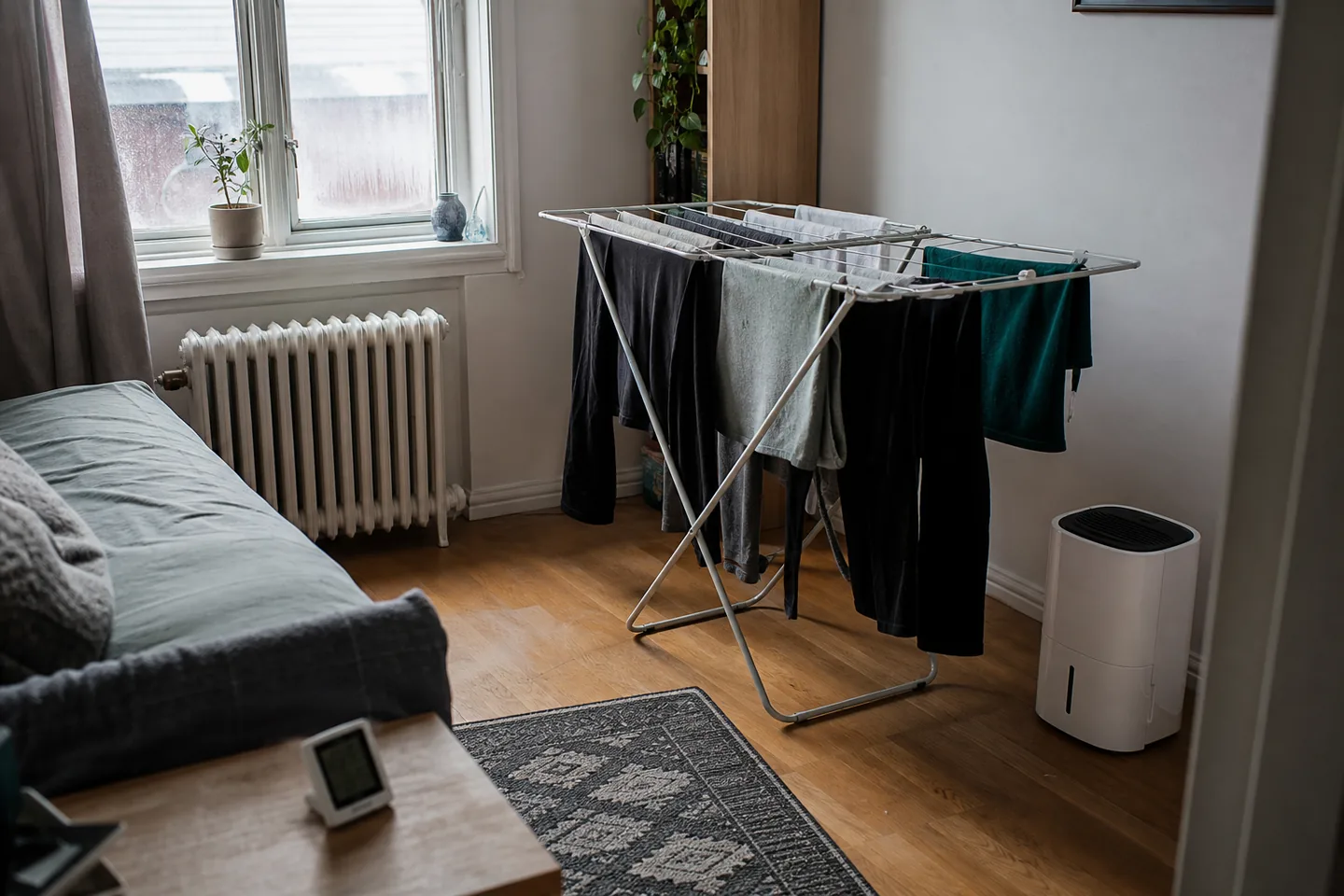
A renter-friendly way to dry clothes faster indoors by choosing a better rack position, spacing garments, moving air, and watching humidity.
Dry without a dryer
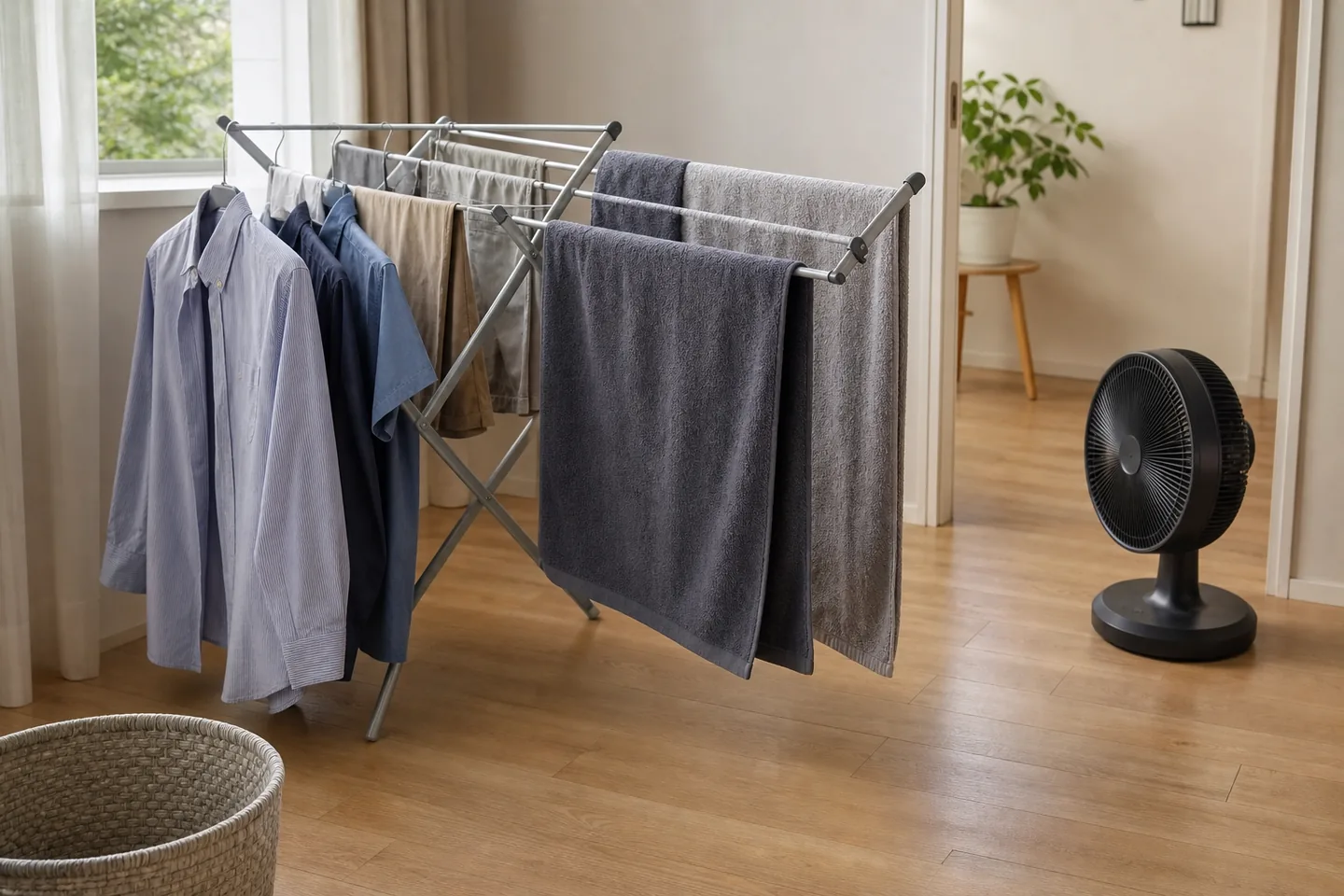
Build an indoor drying routine around care labels, washer spin, rail length, garment spacing, airflow, humidity, and a clear reset time.
Dry without a dryer
Compare wing, tower, wall, over-door, ceiling, and flat-dry formats by usable rail length, footprint, stability, storage, and access.
Dry without a dryer
Reduce drying time with better water extraction, smaller loads, garment spacing, airflow, humidity control, and timed mid-load checks.
Indoor moisture, ventilation, mildew prevention, and seasonal adjustments.
Humidity & airflow
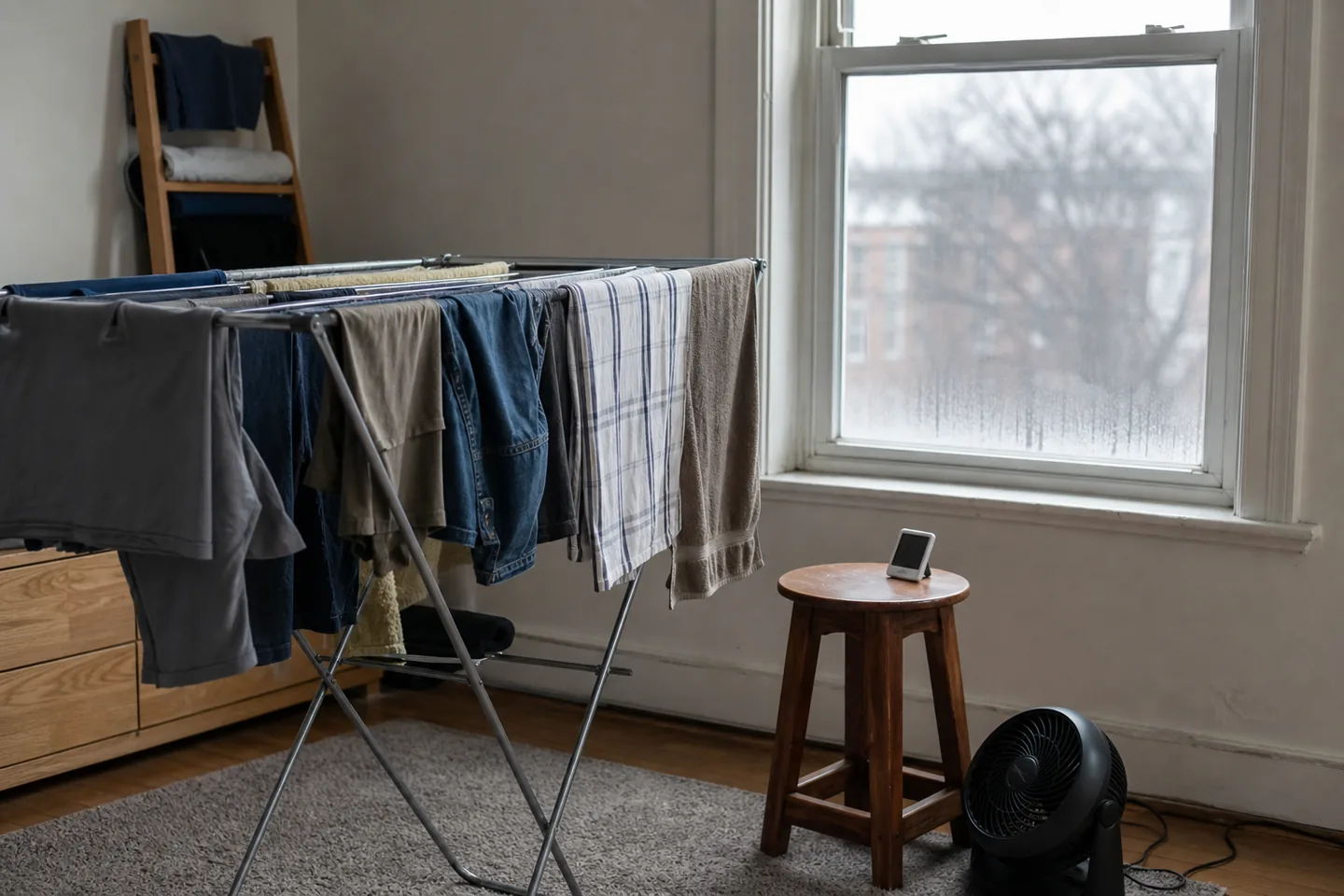
Use relative humidity, condensation, load density, ventilation, and drying progress to decide when an indoor laundry routine needs adjustment.
Humidity & airflow
Trace musty laundry back through wash loading, detergent, spin, rack spacing, finish time, storage, and room moisture instead of masking odor.
Humidity & airflow
Adapt load size, airflow, ventilation, humidity monitoring, garment spacing, and finish checks when cold surfaces and closed windows slow drying.
Safer, calmer systems for laundromats and apartment laundry rooms.
Shared laundry
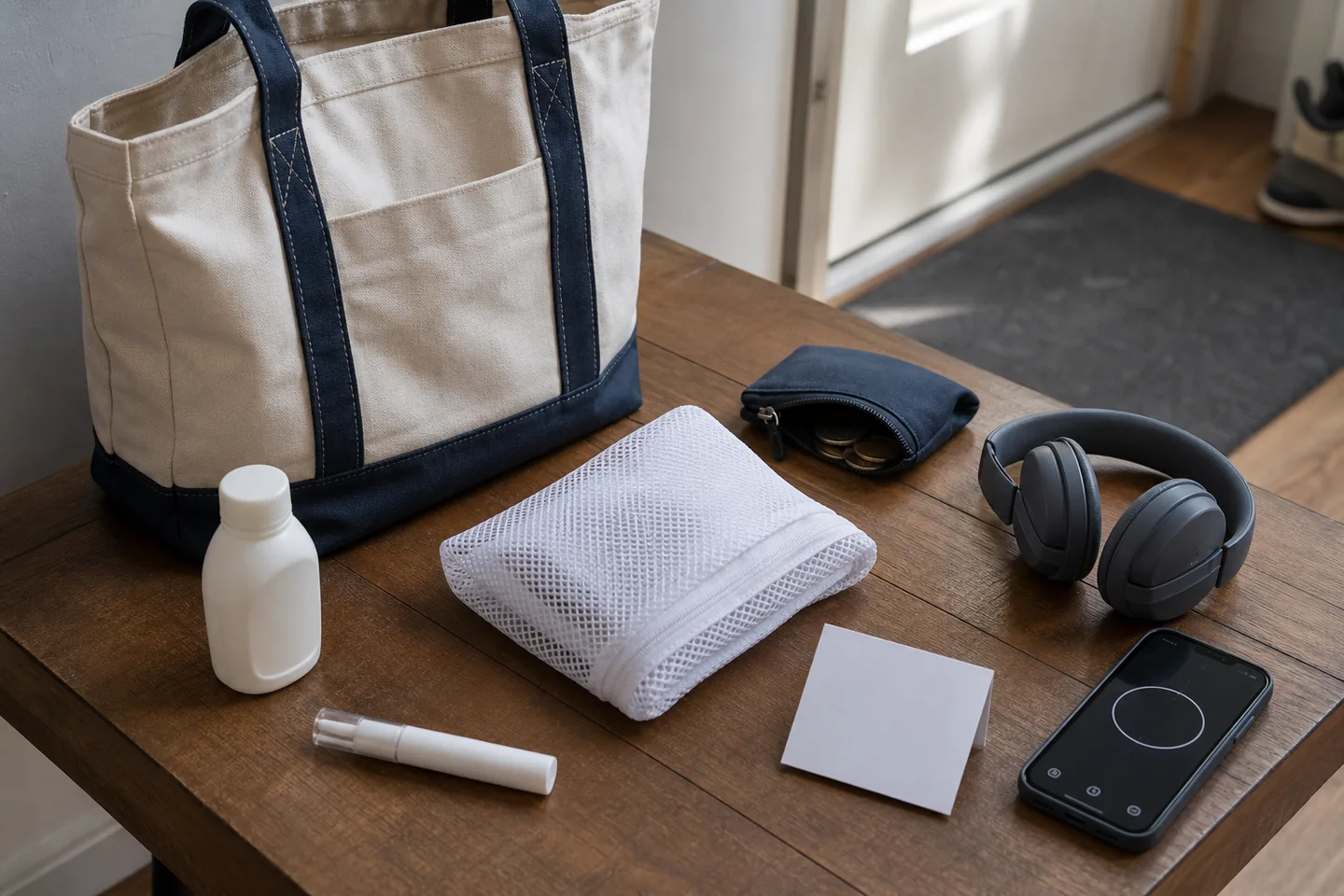
Create a compact, refillable laundromat kit for sorting, payment, dosing, stain notes, clean transport, and the trip home.
Shared laundry
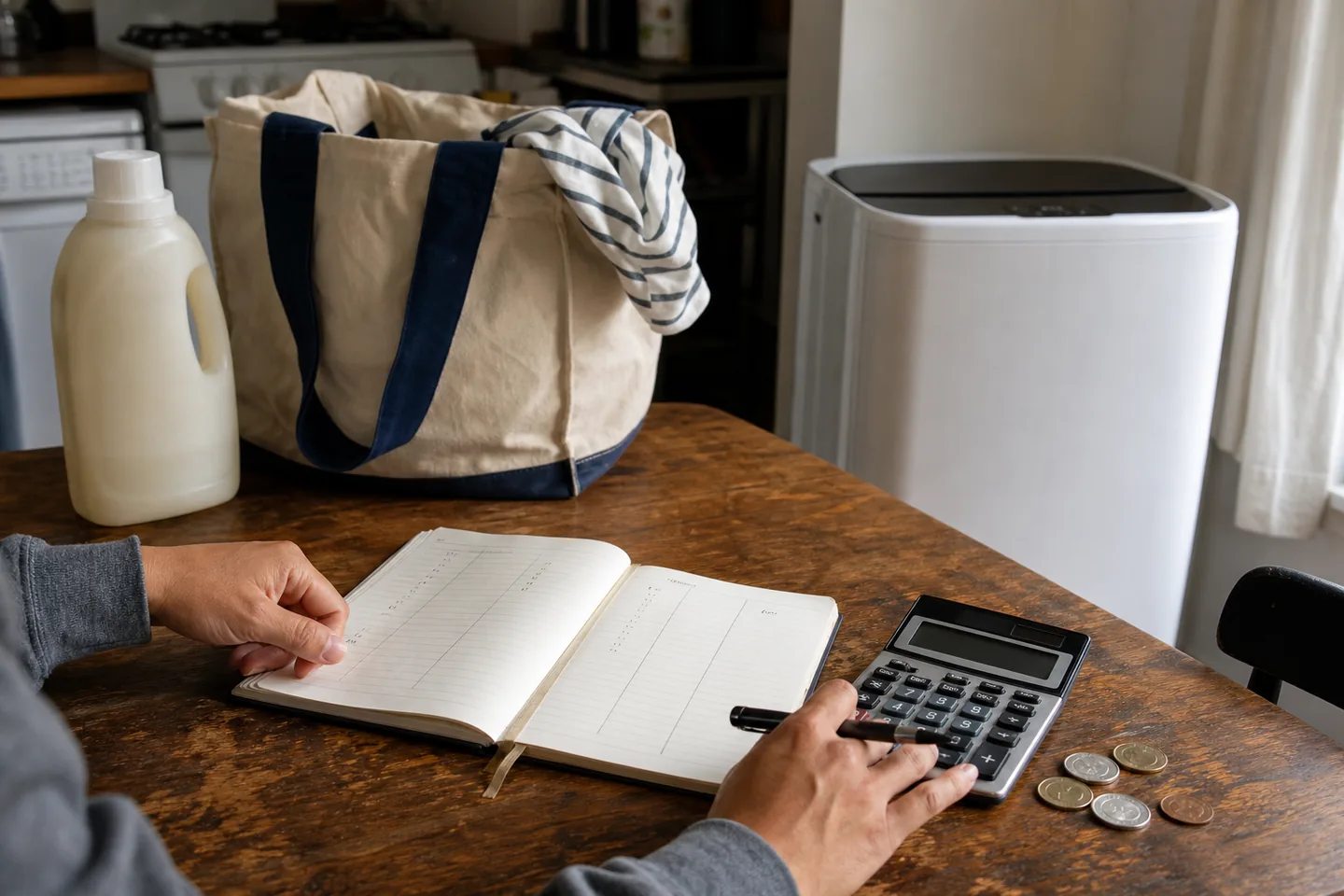
Build a fair monthly comparison using local wash and dry fees, transport, time, utilities, equipment, maintenance, bedding, and permission.
Shared laundry
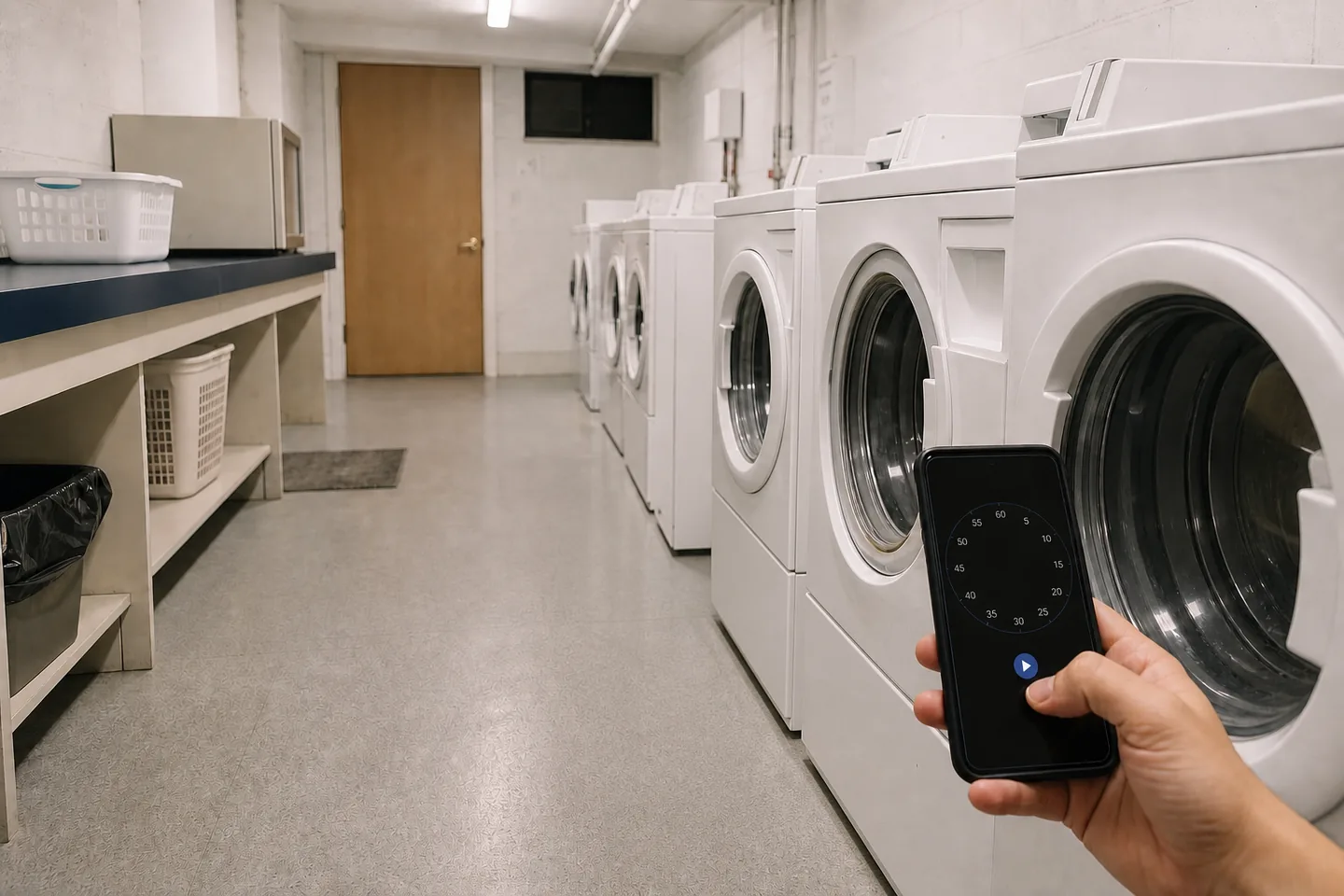
Use clear timing, machine checks, prompt transfers, clean surfaces, posted rules, and a calm lost-item process in shared laundry rooms.
No-drill storage, fold-away setups, and supplies that earn their footprint.
Small-space storage
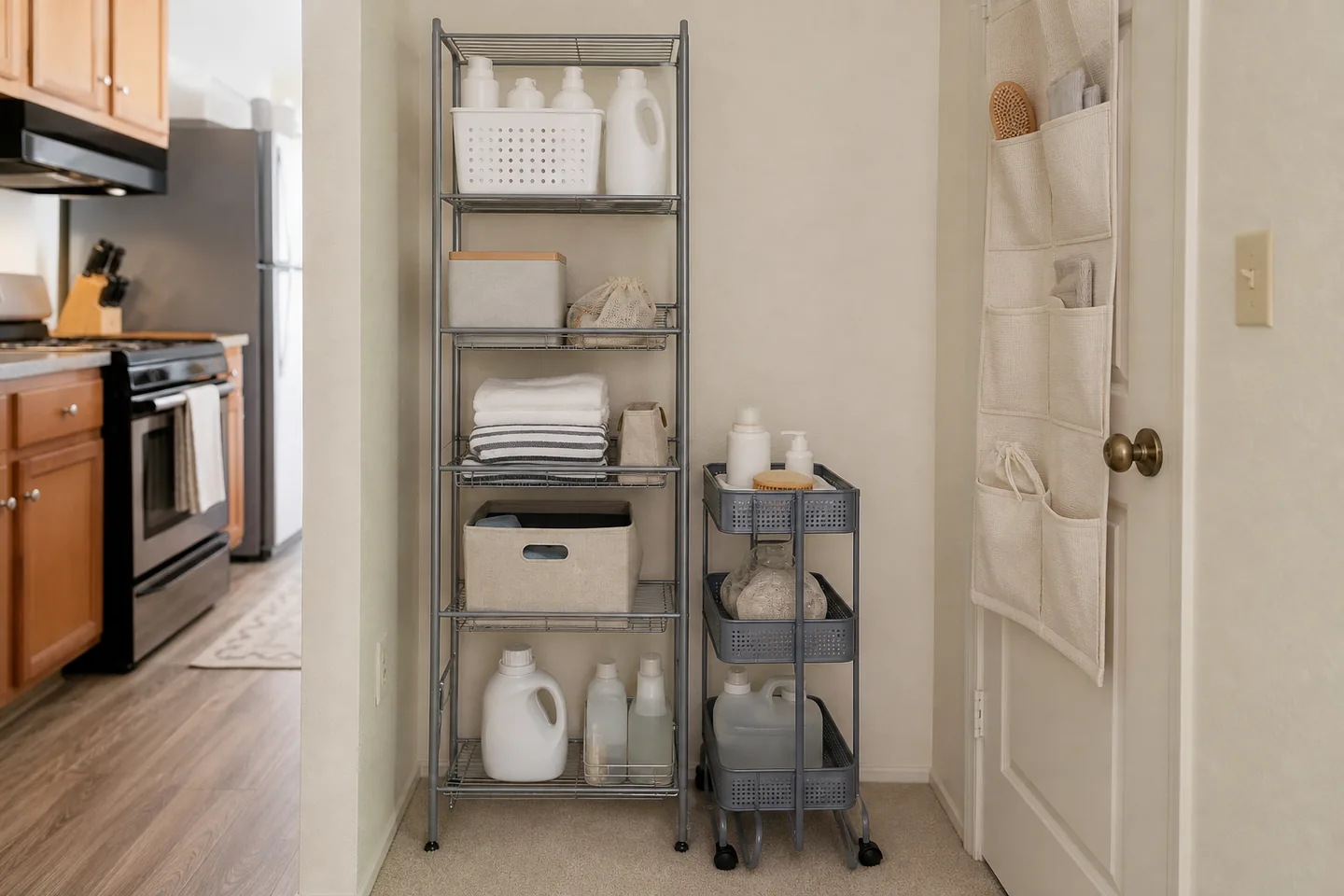
Plan a renter-friendly laundry zone with measured shelves, carts, door storage, labeled supplies, load limits, ventilation, and a full reset path.
Small-space storage
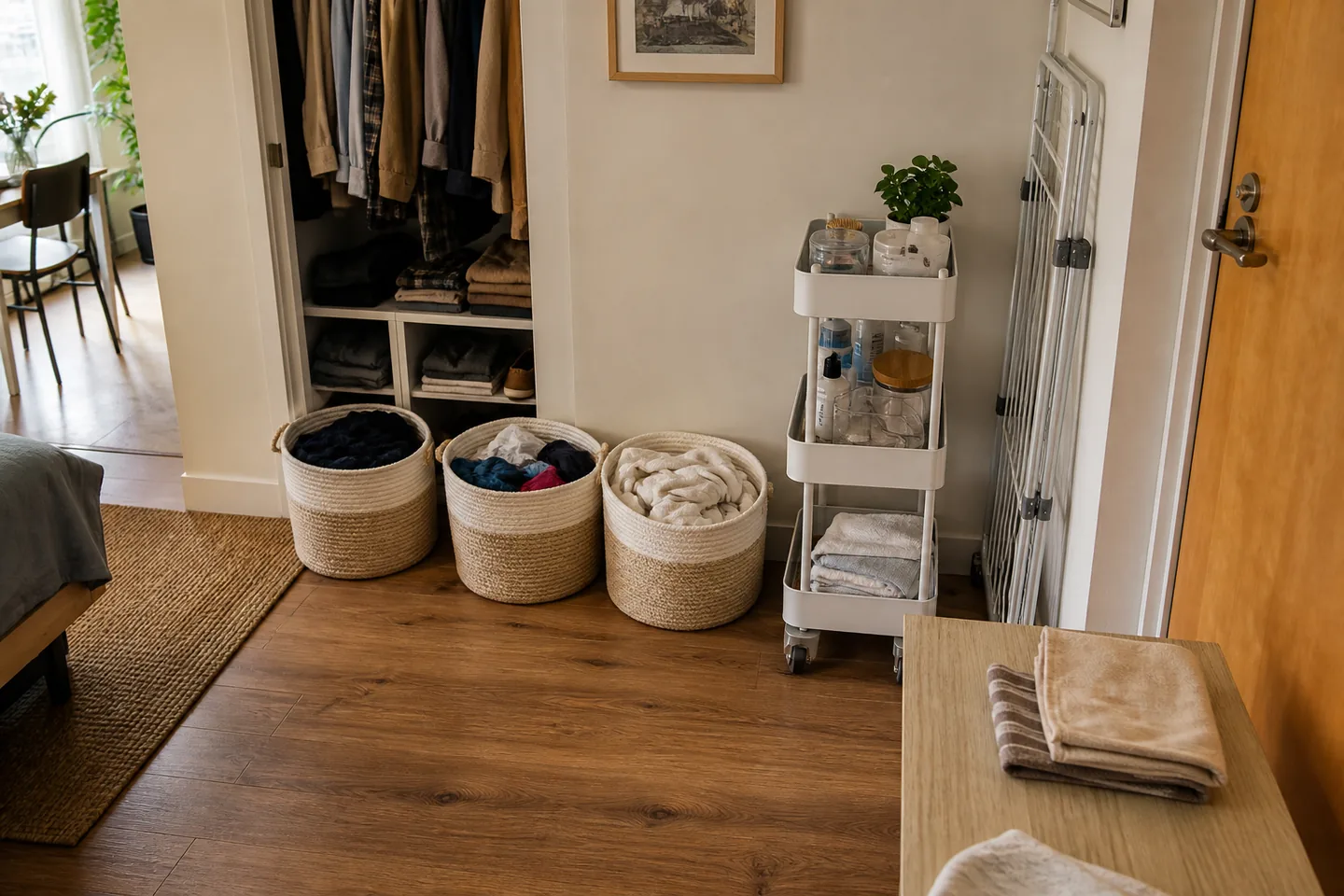
Create a weekly rhythm for sorting, small loads, portable washing or laundromat trips, complete drying, folding, and a five-minute reset.