Shared laundry
Shared Laundry Room Etiquette That Prevents Most Conflicts
Use clear timing, machine checks, prompt transfers, clean surfaces, posted rules, and a calm lost-item process in shared laundry rooms.
The short answer
- Follow posted building rules first; informal customs should not override machine or property instructions.
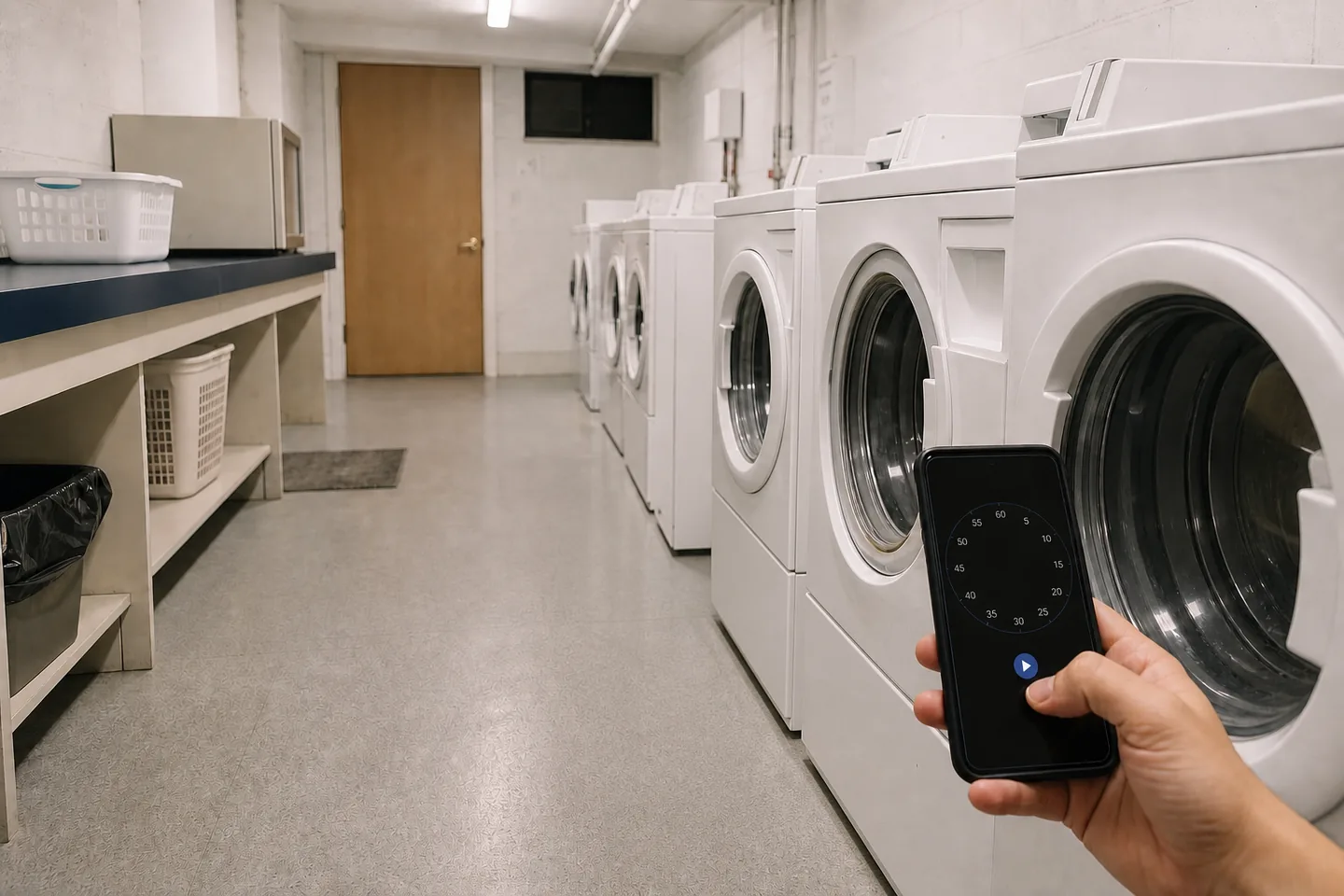
- Set a timer and return before the cycle ends so nobody must decide what to do with your laundry.
- Report broken, leaking, or unsafe machines instead of repeatedly testing them with another load.
Most shared-laundry arguments begin with an ordinary problem: a finished load sitting in the only washer, an unlabeled item on the floor, or someone testing a machine that already sounds wrong. A little timing and a clear handoff prevent most of that tension.
Building rules and machine instructions always come first. Etiquette fills the gaps; it doesn’t give anyone permission to override reservations or handle another person’s property. Pack the practical basics with the laundromat go-bag checklist, and compare the longer-term alternatives in the laundromat versus portable washer guide.
Inspect before loading
Look inside the drum, detergent compartments, door seal, and nearby surface. Remove nothing with bare hands if it could be sharp, contaminated, or unsafe. Report serious residue, leaks, damage, burning smell, or an error condition to the responsible service rather than testing the machine again.
Check pockets at home. Pens, tissues, coins, and small objects become a problem for everyone when they leave your load.
Read posted dosing and product restrictions. High-efficiency machines may require HE detergent, and shared facilities may limit bleach or other products.
Start only when you can finish
Do not begin a cycle just before you must leave. Set a timer shorter than the displayed estimate and return early. App notifications are helpful but not a reason to be far away at the expected end.
If your schedule changes, ask someone you trust for help rather than leaving an unknown person to decide what to do with wet clothing.
Prompt transfer keeps machines available and prevents damp laundry from sitting closed.
Handle occupied machines cautiously
Never stop another person’s active cycle. If a finished load remains, follow posted building policy. Some properties specify a waiting period or a designated clean surface; others say residents should not move another person’s belongings at all.
If no policy exists, the least-conflict option is usually to wait briefly or use another machine. Do not place laundry on the floor, on a dirty surface, or inside a trash container.
For recurring problems, request a written building policy rather than escalating through notes aimed at a particular neighbor.
Leave the machine ready
Check the entire drum and seal for socks, color-catching sheets, tissues, or residue. Wipe a spill you caused using the facility’s permitted method. Remove lint from the dryer screen where posted instructions require it.
Do not leave detergent bottles, pods, dryer sheets, baskets, or trash behind. If you find an item that is not yours, use the designated lost-and-found process.
Keep loads within the system
Follow care labels and machine capacity guidance. Stuffing a drum can affect cleaning, balance, and cycle availability. Separate items that require special treatment before arriving.
Do not dye fabric, wash heavily contaminated items, or use unusual chemicals in a shared machine unless the property explicitly allows it and the product and machine directions support it. These processes can affect the next user.
Resolve problems with facts
For a broken machine, record the machine number, time, displayed error, and visible condition. Use the official reporting channel. Avoid opening panels, unplugging equipment, or attempting repairs.
For a conflict, describe the shared rule and the action needed: “Machine 4 finished 20 minutes ago and the posted policy says staff handles unattended loads.” Specific process language works better than judging the person.
The best etiquette system makes fewer decisions personal. Clear timing, posted rules, and a clean handoff let neighbors share limited equipment without sharing unnecessary friction.
Sources and verification
We use primary sources where safety, labeling, energy, or moisture guidance is involved. Product-specific instructions always defer to the current manual.
See something that needs an update? Read our corrections process.