Wash without hookups
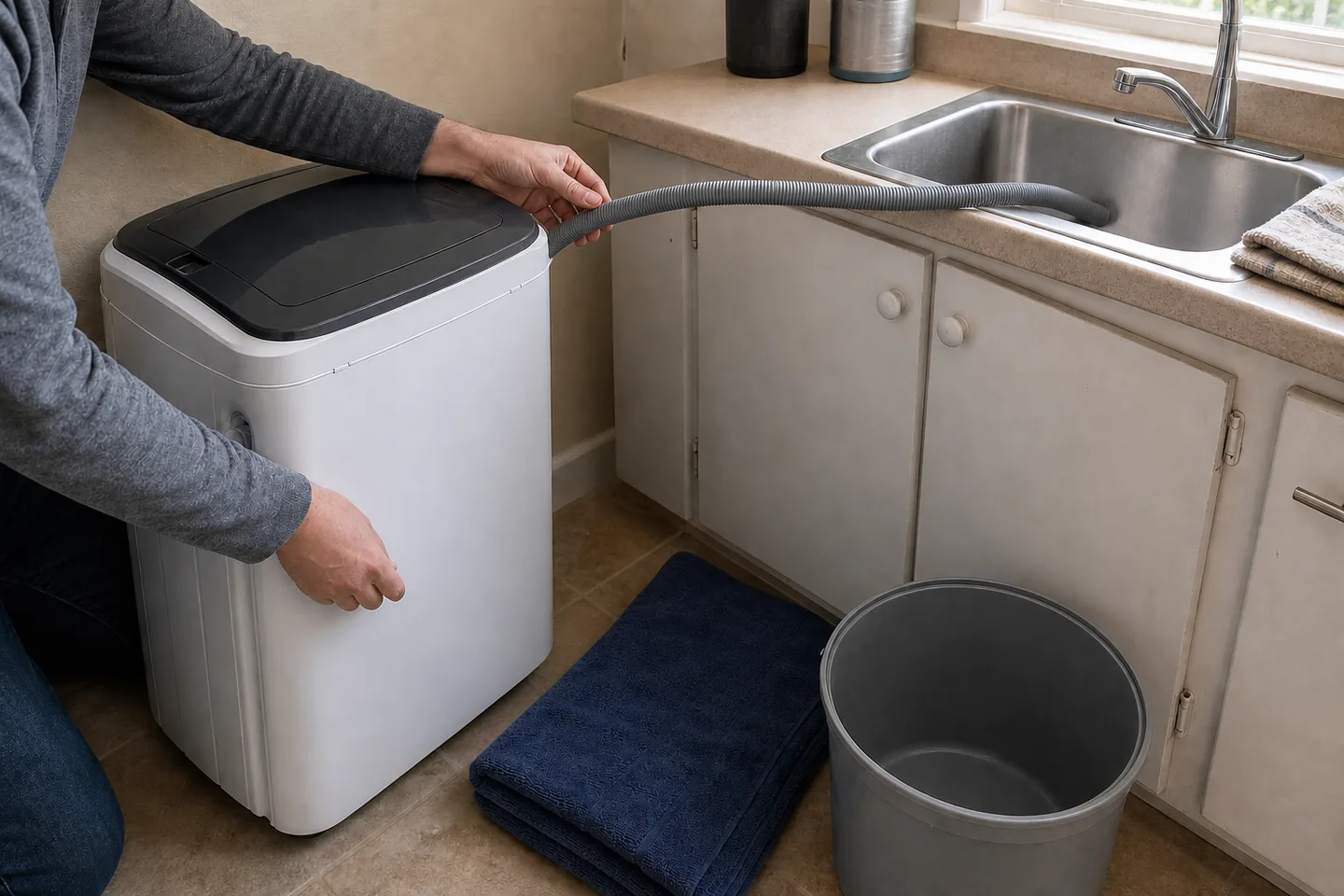
How to Drain a Portable Washer Into a Sink Without Guessing
Plan sink capacity, drain-hose placement, supervision, residual-water handling, and a first-cycle test around the washer manual.
The short answer
- A sink that drains normal faucet flow can still back up when a washer pumps out; test the drain condition before the first load.
- Use the drain-hose height, support, and securing method specified by the appliance manufacturer.
- Supervise the entire first cycle and build residual-water cleanup into every reset.
A kitchen sink can look perfectly normal while you wash your hands and still struggle when a portable washer pumps out a tub of water. Drainage is its own test; a successful faucet connection doesn’t answer it.
The hose needs the height, support, and restraint specified by the washer manual, and the sink needs to clear the discharge without rising. Review the complete portable washer apartment guide first, and don’t buy an adapter until the separate faucet compatibility check also passes.
Start with the washer manual
Find the drain section for the exact model. Record:
- the allowed drain destination;
- minimum and maximum hose height, if specified;
- whether a supplied guide, clamp, tie, or hook is required;
- maximum hose extension and approved parts;
- any warnings about sealing the hose into a pipe;
- the residual-water draining procedure after use.
These details affect siphoning, pump performance, and leak risk. Do not copy hose height from a different model.
Give the sink a realistic preflight check
Remove dishes, strainers that can clog, and anything that could cover the drain. Clean visible debris. Fill the basin to a marked level, then release it and watch the whole drain cycle.
Pause if water drains slowly, pools around the outlet, bubbles into a second basin, or rises elsewhere. Those are plumbing questions to resolve before adding washer discharge.
Keep the stopper completely out of the basin during washer use. A chain, cloth, or hose should not be able to pull it closed.
Secure the hose against movement
Use the manufacturer’s supplied support or approved securing method. Position the outlet so discharge enters the basin without pushing the hose backward. Check that the hose cannot be knocked loose by the faucet connector, a cabinet door, a pet, or someone reaching for the sink.
Avoid sharp bends and crushed sections. Do not create an airtight seal at a drain unless the manufacturer specifically requires that configuration.
Before adding laundry, gently tug the secured assembly in the directions normal movement could occur. It should stay in its intended position without stressing the washer connection.
Run a staged first test
Keep the area clear and stay beside the machine.
- Start with the smallest manufacturer-permitted test or load.
- Watch the inlet connection through the fill stage.
- Listen for changes as the pump begins.
- Watch the sink level and hose position through the entire discharge.
- Check the floor, cabinet base, hose joints, and faucet afterward.
Know how to pause or stop the washer and where to shut off the faucet before the test begins. If the sink level rises faster than it falls, stop according to the manual rather than waiting to see whether it “catches up.”
Plan for residual water
After disconnection, hoses and connectors may retain water. Follow the manual’s pressure-release and draining sequence. Keep a shallow tray or absorbent towel in the reset zone, but do not let a towel hide an active leak during operation.
Allow hoses and connection parts to dry before putting them into closed storage. Store them so ends remain visible and do not drip behind cabinets.
Recheck when the system changes
A successful first cycle is not permanent approval. Recheck the sink when drainage slows, plumbing work occurs, a different hose or adapter is used, or the washer moves to another sink. Stay nearby during every portable-washer cycle; temporary water connections deserve active supervision.
Sources and verification
We use primary sources where safety, labeling, energy, or moisture guidance is involved. Product-specific instructions always defer to the current manual.
- GE Appliances — Portable Washer Draining Into a Sink
- GE Portable Washer Installation Instructions — Manufacturer example showing the drain hose secured to a sink or standpipe.
See something that needs an update? Read our corrections process.