Shared laundry
Build a Laundromat Go-Bag That Makes Every Trip Easier
Create a compact, refillable laundromat kit for sorting, payment, dosing, stain notes, clean transport, and the trip home.
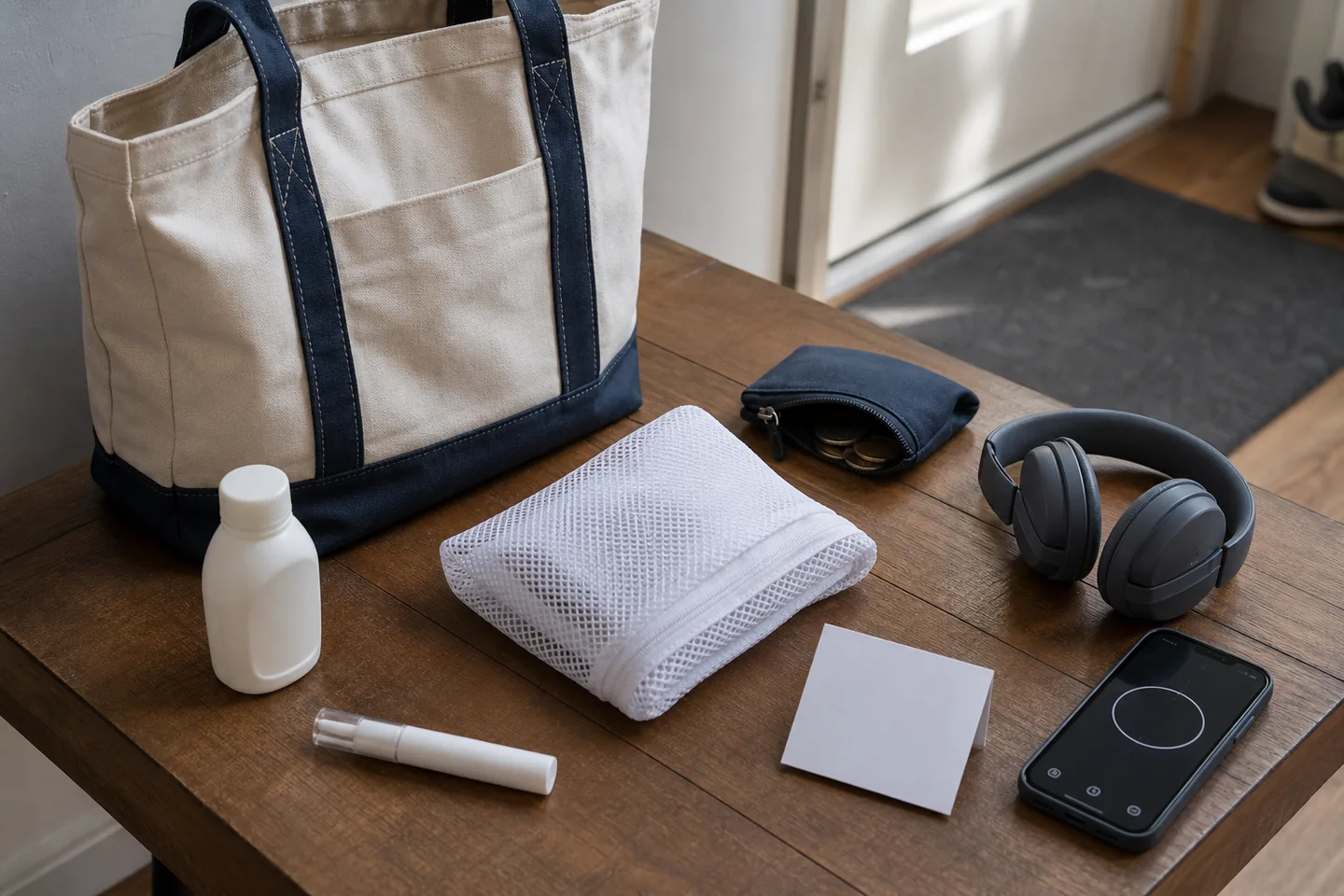
The short answer
- Separate the clean return container from the dirty-laundry carrier so the trip home has a protected destination.
- Pre-measure or bring clearly labeled detergent in a secure container instead of carrying an open bulk package.
- Keep the kit small enough to remain packed between trips; a system you rebuild each week is not a go-bag.
The forgotten item is rarely dramatic. It’s the payment card at the bottom of another bag, the detergent left on the kitchen shelf, or the clean liner you remember only after the last dryer stops.
A laundromat go-bag moves those small decisions into one five-minute reset at home. Pair it with the shared laundry etiquette guide for the machine-room part of the trip, and use the laundromat versus portable washer comparison if repeated trips are making you reconsider the whole routine.
Use two transport layers
The dirty-laundry carrier does not need to touch clean folded clothes on the return trip. Use a washable liner, a separate clean bag, or a folding clean-laundry insert that stays protected until needed.
Choose handles and a volume you can move safely on the actual route. Test stairs, public transit, doors, and the distance from the machine to the folding table. Wheels help only when the route supports them; they can add weight on stairs.
Do not pack above the carrier’s closure or create an unstable cart load.
Pack the repeatable core
Keep these items in the kit between trips:
- payment method required by the location, plus a small backup where practical;
- detergent in a secure, clearly labeled container;
- any fabric product you actually use and can dose correctly;
- a stain note or care-label reminder for special items;
- a small clean cloth for the folding surface;
- the protected clean-return liner;
- a pen or phone note with machine numbers and start times;
- a reusable bag for empty containers or trash.
Avoid carrying chemicals in drink containers or unlabeled jars. Keep products in their original packaging when possible; if a travel container is permitted by the product directions, label it clearly and keep it closed.
Sort before leaving home
Read garment care labels and divide loads before the trip. A simple system uses separate washable bags or colored ties for load groups. Keep “do not machine dry,” delicate, or stain-treated items visibly separate so they do not disappear into a hurried transfer.
Count loads based on machine capacity at the destination, not how tightly everything can be pushed into one carrier.
The U.S. Department of Energy recommends washing full loads and using the appropriate water-level setting for small loads. “Full” still means the machine can operate as intended; follow the posted machine and product directions.
Add a trip card
Keep a compact checklist in the bag or phone:
- Inspect drum and seals before loading.
- Read posted machine directions.
- Confirm temperature and cycle against care labels.
- Set a timer and stay available near the end.
- Check every part of the drum before leaving.
- Put clean laundry only into the clean return layer.
The card is especially useful when machines, payment systems, or cycle times differ.
Design the waiting time
Bring only what helps you stay attentive: headphones, a book, charger, water, or one small task. Keep valuables with you and follow the facility’s rules. Do not leave because an app provides a time estimate; return early enough to move laundry promptly.
If the location is crowded or uncomfortable, test a different time before buying more gear. A schedule change can improve the trip more than a larger bag.
Reset immediately at home
Put clean laundry away, inspect the carrier, and allow any washable or damp components to dry. Refill payment and detergent to the target level. Return the kit to one permanent location.
Record anything that failed: too much weight, a leaking container, no room to fold, or a missing dry-only bag. Change one component before the next trip.
The ideal go-bag looks boring. It is always ready, contains no mystery products, and gets you home with clean laundry still clean.
Sources and verification
We use primary sources where safety, labeling, energy, or moisture guidance is involved. Product-specific instructions always defer to the current manual.
See something that needs an update? Read our corrections process.