Humidity & airflow
Indoor Laundry Drying and Humidity: A Practical Risk Guide
Use relative humidity, condensation, load density, ventilation, and drying progress to decide when an indoor laundry routine needs adjustment.
The short answer
- EPA guidance says indoor relative humidity should stay below 60 percent and ideally between 30 and 50 percent when possible.
- Treat condensation, musty odor, and stalled drying as action signals even when one humidity reading looks acceptable.
- Reduce the moisture load first, then improve airflow and moisture removal in ways appropriate to outdoor conditions.
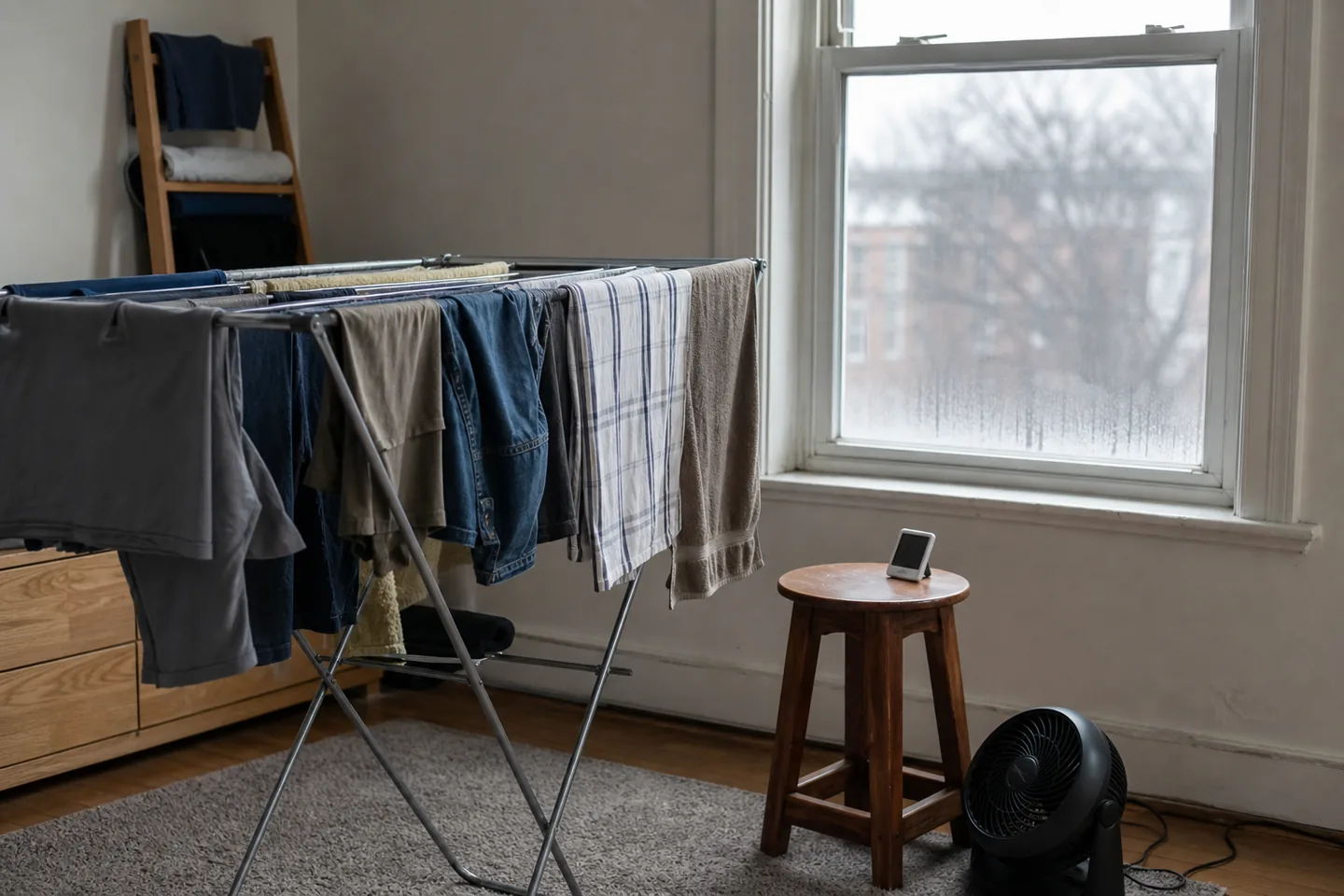
A rack of wet clothes can make a room feel clammy long before you notice water on the glass. That doesn’t mean indoor drying is automatically unsafe; it means the moisture needs somewhere to go.
Watch three clues together: the humidity reading, what the room is doing, and whether the clothes are making steady progress. A number that looks acceptable doesn’t cancel out condensation or a stubborn musty smell. Start with the full apartment no-dryer routine, then use the musty-laundry troubleshooting guide if odor remains after the fabric feels dry.
Treat the meter as one clue, not the verdict
The U.S. EPA advises keeping indoor relative humidity below 60 percent and ideally between 30 and 50 percent when possible. CDC guidance is more conservative for mold prevention, recommending no higher than 50 percent all day long.
These numbers are building-moisture guidance, not a timer that guarantees a particular shirt will dry. Relative humidity changes with temperature and location. A reading beside a window can differ from one in the center of the room.
Use a hygrometer as a trend tool:
- note the room reading before hanging laundry;
- check again after the load has been up for a while;
- check near known cool surfaces for condensation;
- compare similar loads across seasons.
If the meter has not stabilized after moving rooms, give it time according to its instructions.
Watch for conditions the number can miss
Act when you see water on windows, walls, or pipes; smell a persistent musty odor; find fabric still damp at seams after an unusually long period; or notice moisture collecting behind furniture.
The EPA says to act quickly when condensation or moisture collects on windows, walls, or pipes: dry the wet surface and reduce the moisture source. Do not treat wiping the window as the complete solution if the same pattern returns with every laundry load.
People with asthma, mold allergy, chronic lung disease, or immune compromise may need additional caution and professional medical guidance about damp or moldy environments.
Use a simple response ladder
Level 1: The load is progressing and the room stays stable
Keep garments separated, maintain normal room airflow, and recheck the slow areas. No extra device is automatically necessary.
Level 2: Humidity rises or drying slows
Remove dry items, spread the remaining pieces, reduce future load size, and improve room-air movement. When weather and outdoor air quality permit, ventilation may help.
Level 3: Condensation appears or humidity stays high
Stop adding wet loads. Use an exhaust fan that vents outdoors, air conditioning, or a maintained dehumidifier as appropriate to the home. Dry collected moisture and inspect sheltered surfaces.
Level 4: Musty odor or visible mold appears
Pause indoor drying in that area and address the moisture problem. CDC says visible or smelled mold should be removed and the moisture source fixed. Renters should document and report building leaks or recurring moisture concerns promptly.
Choose airflow based on outdoor conditions
Opening a window is not always moisture removal. If outdoor air is warm and very humid, bringing it indoors may not improve the situation. Rain, smoke, pollen, security, and temperature also matter.
Mechanical exhaust that vents outside can move moist air out. Air conditioning can remove moisture while cooling. A dehumidifier collects moisture but needs correct sizing, placement, drainage, cleaning, and clearance.
A circulation fan moves air around the room; it does not remove water from the home by itself. Pair circulation with a path for moisture to leave or be collected.
Make the laundry load fit the room
The most reliable control is often less wet fabric at once. Split large loads, use an appropriate high spin, separate towels from lightweight clothing, and avoid overlapping items.
Set a finish deadline based on past successful loads. If the load repeatedly misses it, change the system before normalizing permanently damp fabric.
The goal is not a perfect meter reading every minute. It is a room that returns to its normal humidity, a load that dries completely, and no repeated condensation or odor left behind.
Sources and verification
We use primary sources where safety, labeling, energy, or moisture guidance is involved. Product-specific instructions always defer to the current manual.
See something that needs an update? Read our corrections process.