Wash without hookups
Will a Portable Washer Connect to Your Faucet? A Compatibility Check
Inspect aerator access, threads, faucet shape, hose reach, sink use, and drain performance before assuming a portable washer will connect.
The short answer
- A removable aerator is a common requirement for faucet-connected washers, but the exact adapter and thread must match the machine manual.
- Pull-down, hidden-aerator, and unusually shaped faucets need extra verification and may not be suitable.
- Test sink drainage and hose security separately from the inlet connection.
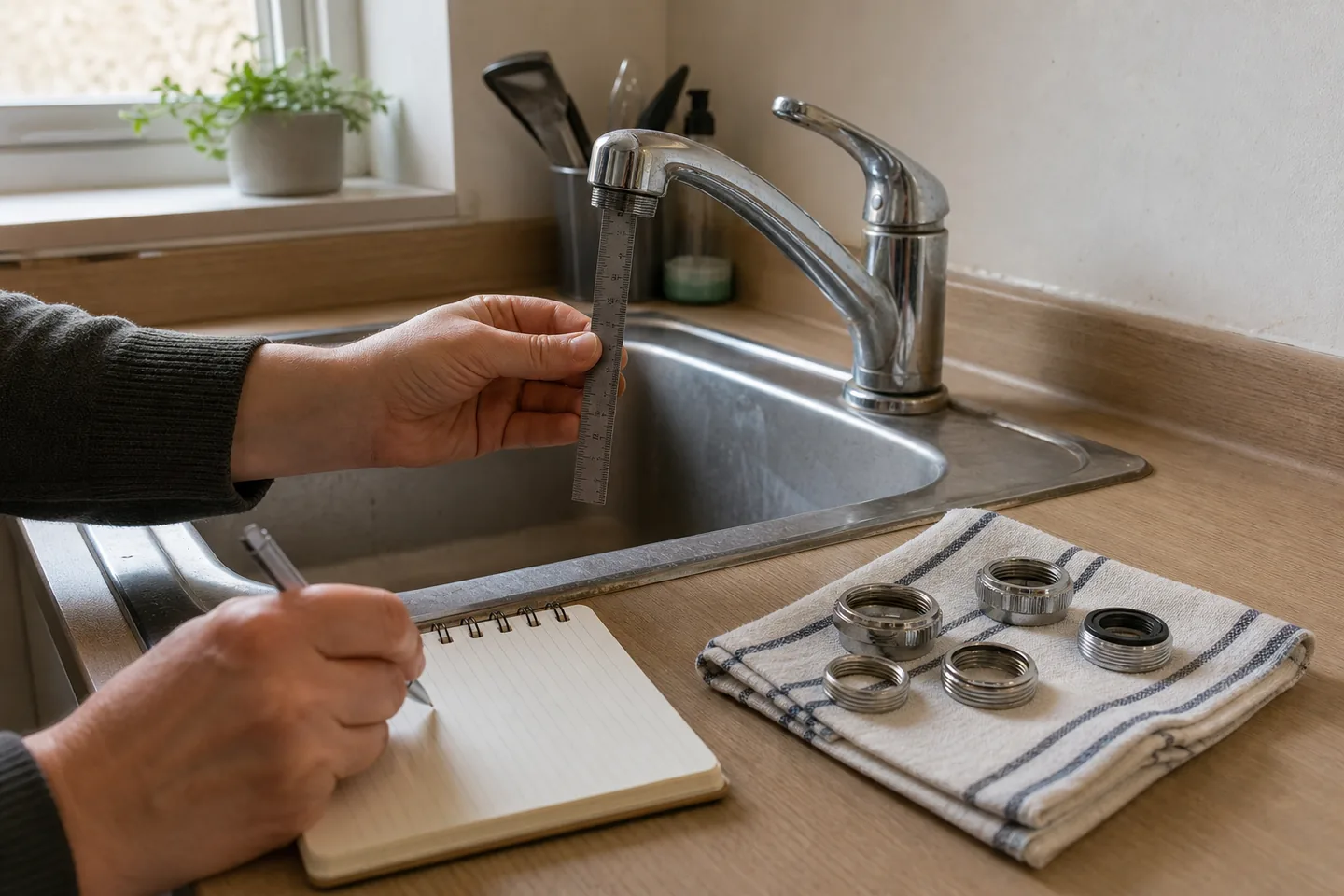
That little bag of faucet adapters can make a portable washer feel like a universal appliance. It isn’t. An adapter can join two known thread sizes, but it can’t turn a pull-down sprayer into a rigid outlet or promise that your sink will handle a fast drain cycle.
Inspect the faucet before choosing a machine, then confirm the connection in that model’s current manual. This is one part of the larger portable-washer feasibility check; the sink-drain rehearsal is a separate decision, even when the inlet connection looks perfect.
Identify the outlet style
Look directly at the point where water leaves the faucet.
Conventional fixed spout: Often the simplest candidate. Many have an aerator that unscrews to expose internal or external threads.
Pull-down or pull-out sprayer: The moving head and hose make a rigid appliance connection less straightforward. Do not clamp or improvise. Ask the appliance manufacturer whether that exact faucet style is supported.
Hidden or cache aerator: The aerator sits inside the spout and may require a key. Removing it can reveal a less common thread. Identify the faucet brand and aerator specification before buying an adapter.
Wide waterfall or non-round outlet: Usually lacks the threaded interface used by common portable-washer connectors.
Photograph the outlet from the side and underneath. Include a ruler or known-size coin for scale, but do not use the photo alone to declare a thread size.
Check whether the aerator is genuinely removable
First read the faucet documentation if available. Protect the finish and use the specified tool. If the aerator is corroded, painted in place, or part of a rented fixture you could damage, stop and ask for maintenance help.
Once removed, note whether the faucet exposes threads on the outside or inside. Check the threads for damage and confirm that the sealing surface is flat and clean. Reinstall the original aerator after inspection so the sink remains usable.
Never force an adapter that starts crooked. Cross-threading a rental faucet can turn a compatibility test into a plumbing repair.
Match the machine’s connection system
Open the manufacturer installation guide—not only the retailer description. Find the included connector, adapter part numbers, supported thread information, water-pressure requirements, and disconnection procedure.
Some systems combine inlet and drain functions in one assembly; others use separate hoses. A compatible adapter from another machine is not automatically compatible with yours.
Your verification question should be specific: “Does the included or manufacturer-approved adapter connect this washer to this faucet outlet?” If you cannot answer from the manual, contact the manufacturer with the faucet photos and measurements.
Measure reach without stretching
Mark the washer’s operating position and route a flexible tape along the path the hose would take. Include gentle bends and clearance around cabinet doors. The hose should not hang under tension, kink behind the machine, or pull sideways on the faucet.
Also check daily sink use. A portable washer may occupy the faucet during a cycle. If that blocks the only kitchen or bathroom sink, decide whether the timing works for everyone in the home.
Inspect the sink as a drain
Connection success does not prove drainage success. Clean the drain and observe how quickly a full basin empties. Look for slow flow, bubbling, backup in a second basin, or a stopper that can shift closed.
The appliance manual controls drain-hose height and placement. Secure the hose using the supplied method. It must not slip out when the pump starts or move when someone brushes past it.
Stay beside the first complete fill, wash, and drain sequence with an ordinary small load. Stop the machine if the connection leaks, the sink level rises unexpectedly, or the hose shifts.
Know when an adapter is not the answer
Pause the project if the faucet is damaged, the aerator cannot be removed safely, the approved adapter cannot be identified, the hose cannot reach without strain, or the sink drains slowly. Changing to a different sink may help only if the lease, manual, faucet, drain, and outlet all agree.
Compatibility is a chain. The correct adapter is one verified link, not permission to ignore the rest.
Sources and verification
We use primary sources where safety, labeling, energy, or moisture guidance is involved. Product-specific instructions always defer to the current manual.
- GE Appliances — Portable Washer Unicouple Connection
- GE Appliances — Portable Washer Draining Into a Sink
See something that needs an update? Read our corrections process.