Small-space storage
No-Drill Laundry Storage for Renters: Build a Reversible Zone
Plan a renter-friendly laundry zone with measured shelves, carts, door storage, labeled supplies, load limits, ventilation, and a full reset path.
The short answer
- Store by workflow—sort, treat, wash, dry, reset—not by filling every available gap.
- No-drill does not mean no-load-limit; verify door, shelf, cart, adhesive, and surface ratings.
- Keep chemicals in original labeled containers and keep wet hoses or cloth out of closed storage until dry.
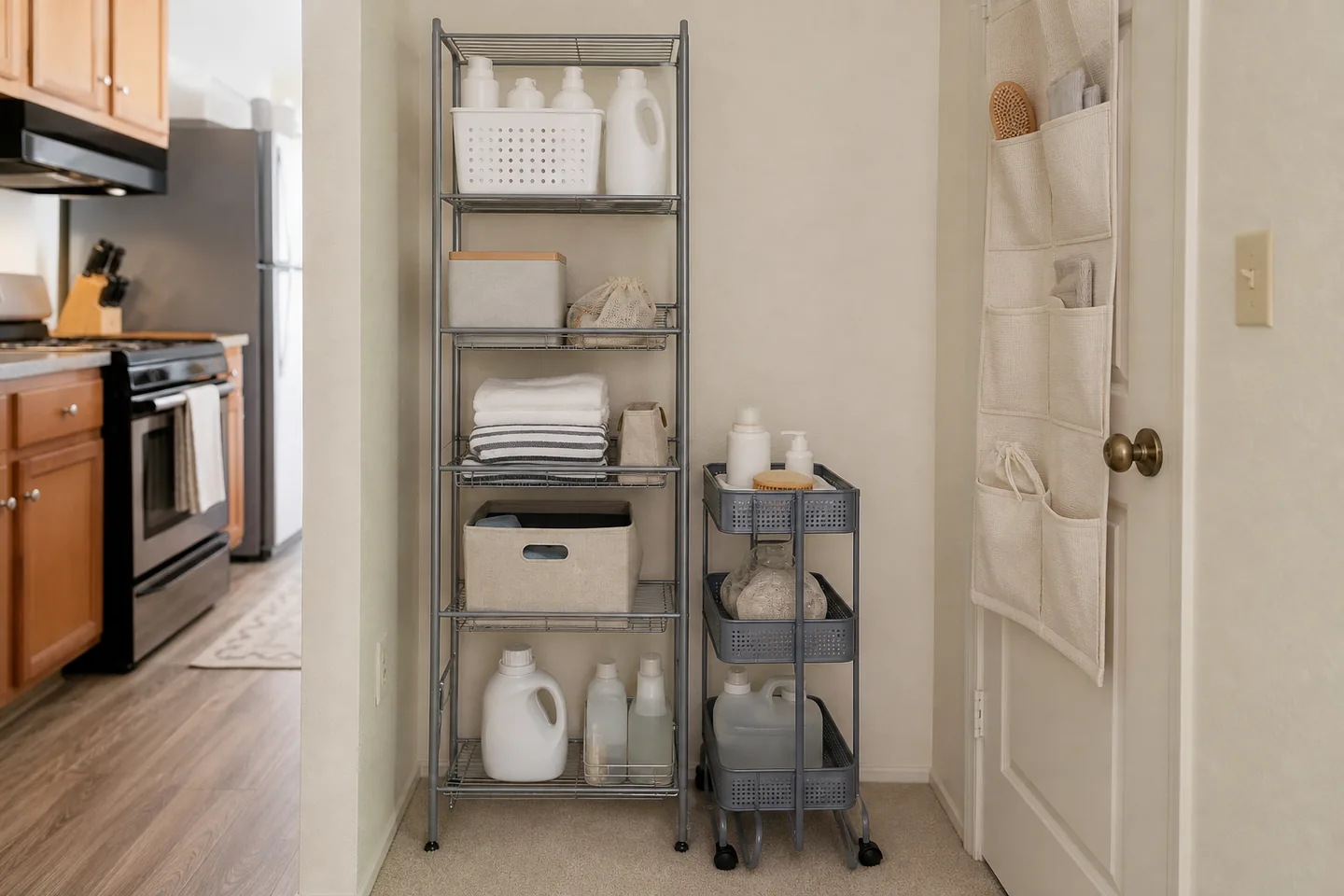
No-drill storage doesn’t have to mean a wall covered in adhesive hooks. In a rental, a narrow cart, a rated tension system, an over-door organizer, or a shelf you already own may be easier to trust—and easier to take with you.
Start with the way laundry moves through the apartment, not with an empty patch of wall. The small-space laundry routine helps define what needs a home; the small-apartment drying rack guide covers the bulky item that often refuses to stay neatly stored.
Map the five states of laundry
Give each state a specific home:
- Dirty and sorted: breathable hamper sections or separate washable bags.
- Pretreating: a small tray where a garment can wait without staining furniture.
- Washing: measured detergent and the exact connection parts needed.
- Drying: rack, hangers, clips, flat-dry mesh, and a place for finished items.
- Reset: shallow tray or towel for residual hose water, plus open drying space before storage.
If an object does not support one state, question whether it deserves laundry-zone space.
Measure the movement, not just the shelf
A narrow cart must still roll past baseboards and handles. An over-door organizer changes door thickness and swing. A tension shelf needs correct opposing surfaces and clearance from pipes or fixtures.
Tape the proposed footprint, then rehearse:
- opening the door or cabinet fully;
- lifting the heaviest supply from its actual height;
- moving the portable washer or hamper past it;
- reaching the back without pulling everything out;
- cleaning the floor and checking for leaks.
Leave access to shutoffs, outlets, plumbing, ventilation, and building equipment.
Respect every load rating
“No drill” describes installation, not strength. Check the manufacturer’s surface compatibility and rated load for adhesive, tension, over-door, and freestanding products. Include the container weight, not only the contents.
Wet fabric is heavier than dry fabric and can create leverage when hung from a door. Do not use plumbing pipes, sprinkler components, towel bars, or cabinet doors as drying supports unless they are designed and permitted for that load.
Place heavier stable items low on a cart. Use wheel locks where provided and keep the cart out of a child’s climbing path.
Store products clearly and dryly
Keep detergent and cleaning products in original labeled containers, closed and according to package instructions. Avoid decanting chemicals into food or drink containers. Store them away from children, pets, food, and incompatible products.
Do not seal damp cloths, hoses, faucet adapters, or a wet washer accessory inside a bin. Let them drain and dry in the reset zone first. EPA moisture guidance emphasizes controlling moisture rather than trapping it out of sight.
Keep electrical cords dry, untangled, and free from crushing. Do not turn an extension cord or power strip into a permanent appliance plan where the manual does not allow it.
Use shallow visibility
Small supplies disappear in deep bins. Use one layer when possible, clear labels, and a front-to-back order based on frequency. A simple supply list on the inside of the zone prevents duplicate buying.
Create a refill line on detergent or clip a small note to the hamper when the last dose begins. The goal is not decorative decanting; it is knowing what exists and what is safe to use.
Design a five-minute reset
After laundry:
- return products closed;
- allow wet accessories to dry;
- fold and store the rack only when dry;
- wipe the floor and tray;
- return the clean-laundry bag;
- leave the next load’s path clear.
Time the reset. If it requires moving unrelated furniture or rebuilding multiple containers, simplify the zone. Reversible storage should reduce friction without becoming a second room to maintain.
Sources and verification
We use primary sources where safety, labeling, energy, or moisture guidance is involved. Product-specific instructions always defer to the current manual.
- U.S. CPSC — Extension Cords Business Guidance
- U.S. EPA — A Brief Guide to Mold, Moisture and Your Home
See something that needs an update? Read our corrections process.